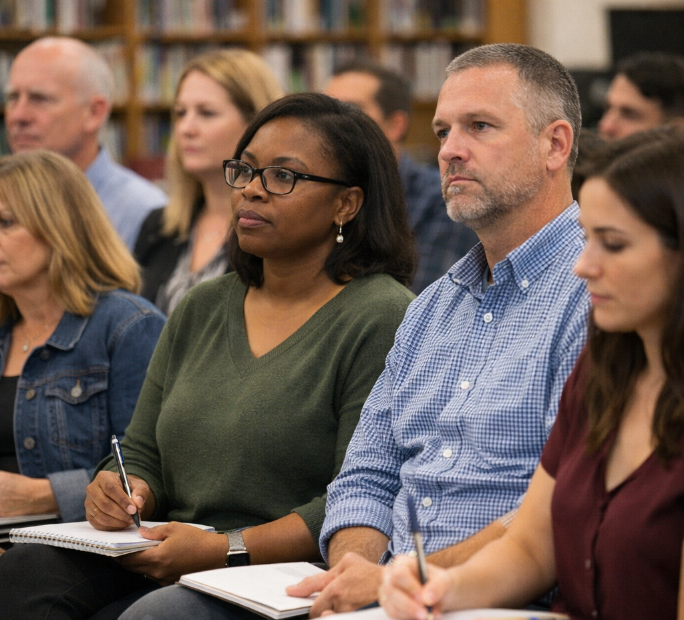
Training for behavioral classrooms plays an important role in supporting staff who work in high-intensity educational environments. While general professional development may cover broad instructional or behavioral concepts, it often does not fully prepare educators for the realities they face when working with students who have significant behavioral needs.
In behavioral classrooms, effective support usually depends on whether training equips staff with specific, practical skills they can apply in real situations—often when conditions are dynamic, unpredictable, or emotionally charged.
In behavioral classrooms, training is less about having the right script and more about preparing staff to make sound decisions across a range of situations.
These are not the only skills that matter, but they are commonly needed in behavioral classroom environments and frequently surface when leaders review incidents, injuries, or staff concerns.
Training for Behavioral Classrooms and Staff Support
Adaptable de-escalation skills
Effective de-escalation relies on practical strategies that can be adjusted based on age, developmental level, and context. Staff benefit from understanding how to modify language and approach depending on who they are working with, rather than relying on rigid scripts. Training should also address what to do when de-escalation isn’t working, what language to avoid, how to de-escalate as a team, and how to remain safer through distance and positioning.
Immediate preventive measures
Preventive measures focus on actions staff can implement right away to reduce escalation risk or make situations easier to manage if they occur. Examples include limiting access to unsafe objects, thoughtful classroom setup and seating, intentional staff positioning, and avoiding known student triggers when possible. These measures are often low-cost and immediately actionable, yet they can significantly influence outcomes.
Personal safety skills during student aggression
Personal safety skills are most relevant in moments when aggression occurs, sometimes without warning. This includes situational awareness, safer positioning during instruction or life-skills support, recognizing early indicators of aggression, maintaining appropriate distance, using protective postures, and applying evasion or redirection strategies to reduce injury risk.
Clear decision-making around support and response
Clear guidance helps staff understand when to call for help, which staff should respond to different situations, and how roles are defined during an incident. Training should align with state laws, regulations, and district policies so decisions protect both student safety and organizational liability.
Consistency, clarity, and preparation often matter more than the specific technique taught.
Non-aggressive physical intervention
In some situations, despite preventive and de-escalation efforts, physical intervention may become necessary. Training for behavioral classrooms should ensure that if a physical hold is required, it is implemented with the highest focus on dignity, proportionality, and safety for everyone involved.
Key Takeaways
- Supporting staff in behavioral classrooms often requires training that goes beyond general awareness or compliance-based approaches.
- Targeted training can help staff prevent escalation, respond more consistently, and reduce injury risk.
- Clear decision-making guidance supports safer responses and helps reduce organizational liability.
- When physical intervention becomes necessary, training should prioritize dignity, proportionality, and safety for everyone involved.
Contact us to discuss how our training could benefit your organization.